

Stone Fence, or Sampson
Early versions of the Stone Fence often traveled under the name Sampson, a mid-eighteenth century mixture of New England rum and hard cider, served warm. The later eighteenth century brought the Stone Fence to the fore, the room temp version that fueled Ethan Allen and the Green Mountain Boys through their raid on Fort Ticonderoga. By the time Jerry Thomas wrote his book in 1862, it had morphed yet again; his version calls for bourbon and sweet (non-alcoholic) cider.
Dorothy Jones’s Coffeehouse Punch
Carrying on the tradition of having a punch or similar batched drink to cap off our annual tavern month, I give you Dorothy Jones’s Coffeehouse Punch. It’s main inspiration is American Orange Punch, which notably includes porter ale in addition to some much more usual suspects (rum, brandy, maraschino, crème de noyaux). But I wanted it to be rye-based (which goes perfectly with the porter), so I did a bunch of research on whiskey-based punches, too. I love the way it turned out, especially with the innovation of using “rye cofee” in place of tea for dilution.

Switchel
Switchel, alias satchel, ginger water, swizzle, harvest drink, Yankee beverage, or haymaker’s punch, among others, is essentially old-timey Gatorade, full of electrolytes and energizing sugars. Historical accounts seem to be split between switchel being non-alcoholic and versions that were spiked with rum. A wide range of people drank switchel, from agricultural workers to children to sailors, whalers, and politicians. Our version is very gingery and refreshing.

Rye Coffee
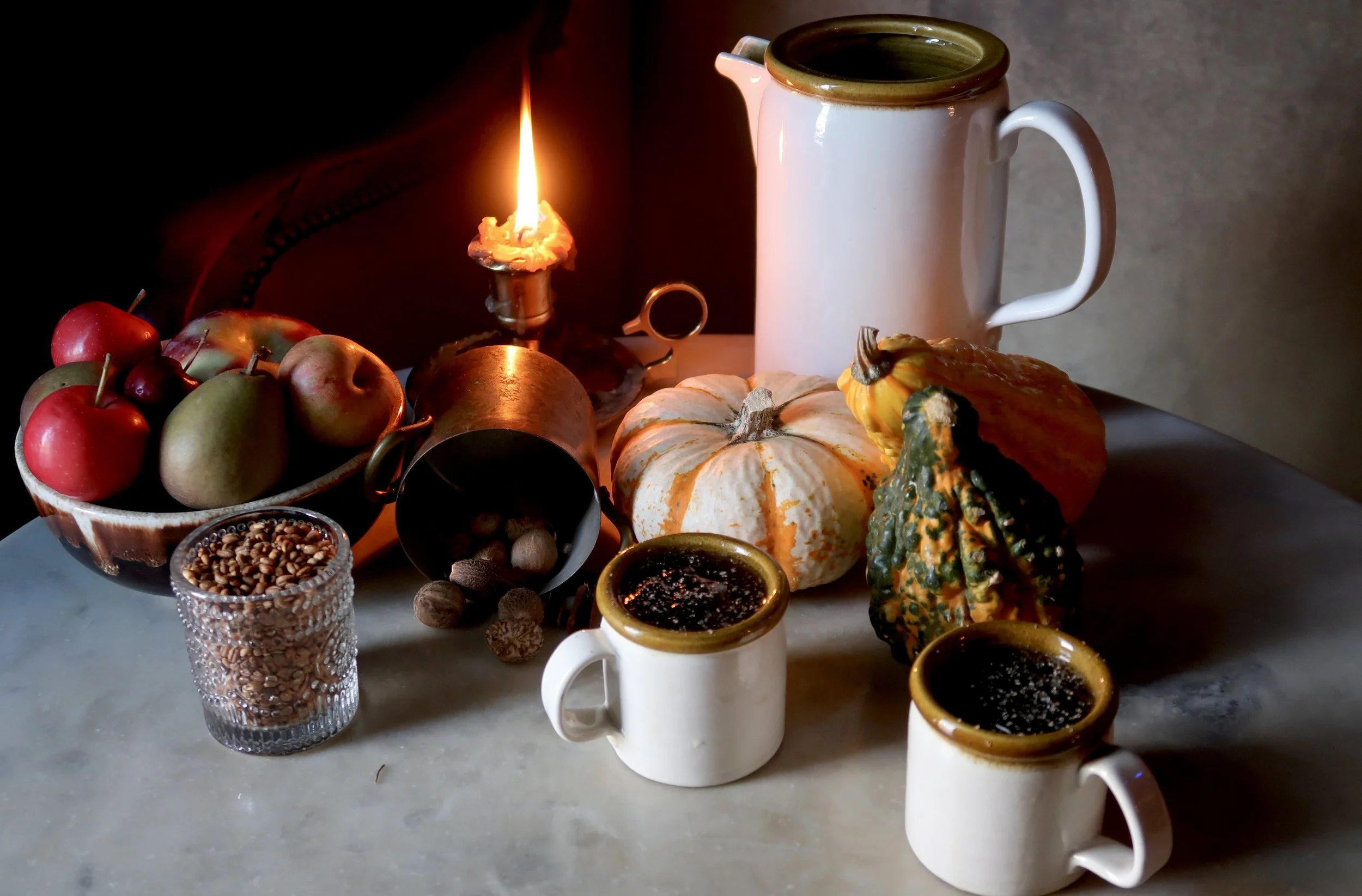
Rye was one of a slew of grains, roots, and vegetables that were roasted and used as coffee substitutes. These were especially popular in times of economic strife, war, and trade disruption. Roasted rye coffee is especially associated with the Civil War. This recipe is a wholly anachronistic cocktail inspired by rye coffee--it's basically an Irish Coffee, and it's maybe my favorite hot drink that I've ever come up with.