

Prescription Julep
This recipe, based on one from the 1850s, gives a window into what pre-Civil War juleps looked like after ice had established itself as an essential part of the drink. The mixture of Cognac and rye and the slight presence of Jamaican rum illustrate the julep’s former life as a rum drink and the preference for a brandy base during this period while also foreshadowing the rise of rye juleps that would come after the Civil War (see Dabney Julep from our Pre-Civil War Black Tavern-keepers theme). NB: crushed ice is preferred over pebble here.

Mint Sling
What’s a julep before it becomes an iced drink? Why, a Mint Sling, of course! During the eighteenth century the eastern seaboard was awash with minty, rum-based slings that also traveled under the name julep. Because we are used to chilled beverages (especially with juleps on the mind), I decided to give this tavern drink the batch-n-freeze treatment; the result is a very pleasing pour that tastes like an aged rum mojito sans ice and soda.

Super-bitter amari
There’s such a vast range of bitterness within the broader category of amaro and the bottles in this chapter feature a mini range on the bitter end of the spectrum. Most amari get their bitterness from gentian, cinchona bark, wormwood, and quassia, though there are other outliers that are less commonly used (like the tree sap in the Elisir Novasalus, below). Super-bitter amari have more potent digestive properties, making them even better suited than their milder cousins for making one feel better after a big meal.

Bitter orange & friends
This is another “in Al’s brain” subcategory. Similarly to the the spiced amari from Chapter 5, the ones in this group bring a very common amaro ingredient–in this case, bitter orange–into the spotlight. They harken back to classic after dinner flavors, too, like mint and chocolate; it brings to mind the “dessert” sections on nineteenth-century restaurant menus, full of oranges and other fruits (fresh and dried) and nuts. I almost called this group “after-dinner digestivo” but that felt a bit too redundant!

Carciofo & cardoon
Leave it to the Italians to use vegetables as a base for amaro–and this chapter is all about amari made from members of the thistle family. Carciofo is the specific name for amari made from artichokes, but cardoon (aka artichoke thistle) and blessed thistle are both used in various amari as well. Amari featuring these ingredients often read as vegetal and earthy; their other botanicals, as well as the base (spirit vs. wine), differentiate the members of this family from one another.

Spiced amari
Many amari feature spice notes–like baking spices and vanilla–as supporting characters, but there are some that feature spices as their primary flavors. This is another one of those subcategories that isn’t formally defined (it just exists in my head) and these three bottles came to mind immediately as perfect examples to illustrate what I mean.

Fernet
Many people don’t know that fernet isn’t a product made by a single producer–Fratelli Branca–but a subcategory of amaro. It should be said, though, that its categorization as an amaro is sometimes disputed because many fernets are technically not liqueurs (contain no sugar except to color the spirit).

Alpine amari
If you’ve paid attention to anything I’ve ever said about amaro, you’ll know that Amaro Braulio is my favorite–it has been for the past ten years. And, as a result, I see it as typical of the alpine category, but that isn’t strictly correct! “Alpine” just denotes the region of origin and the Italian Alps span several regions, from Lombardy, Valle d’Aosta, and Piedmont in the east to Friuli-Venezia Giulia and Trentino-Alto Adige in the west.

Rabarbaro
Rabarbaro is a subcategory of amaro wherein Chinese rhubarb root is a main botanical. This ingredient is naturally smoky, which is a throughline flavor in the category, as is earthiness (roots will do that!). Producers can distinguish themselves through their choices of other botanicals.
Soda-fountain amari
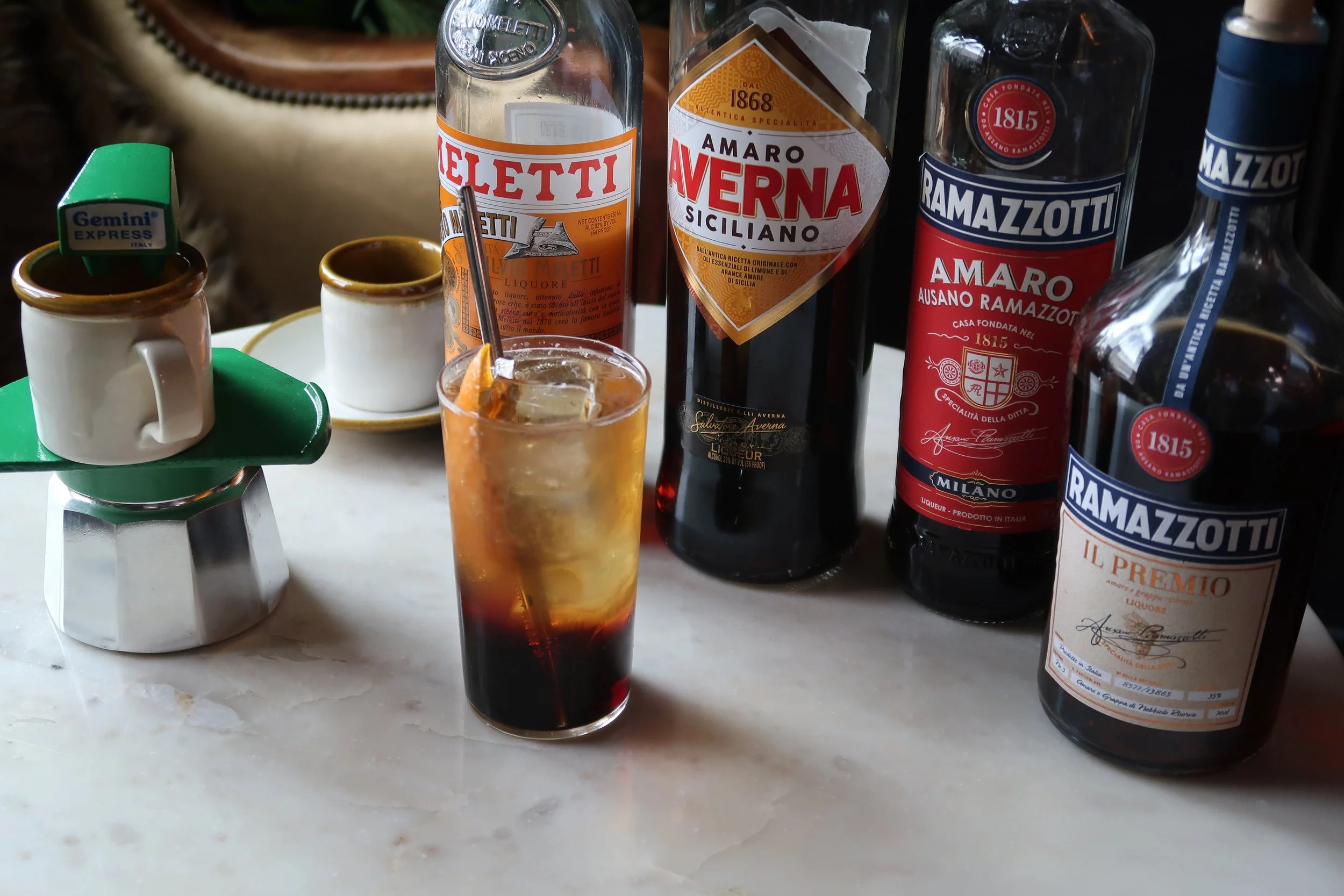
This is a catch-all term for a group of amaro that is grouped in my mind! They all feature an unchallenging bittersweet profile and have these soda fountain-esque flavors that reflect their long-ago past as patent medicines. I have chosen three examples that are easy to find and make for good starter amari.

Brunelle
This obscure gem from the Savoy Cocktail Book (1930) illustrates the power of absinthe as the sole base for a sour. Because of the strength of the base spirit, the ratios of this drink are all topsy-turvy in a most intriguing way–two parts lemon to one part each absinthe and simple syrup; a touch of saline is advised. It sits on the edge of being too tart, but this sour’s complex herbaceous undertones keep you coming back for another sip until, suddenly, you’ve finished it.

Absinthe Suissesse
This drink name has encompassed a wide range of specs since the turn of the twentieth century, but once it settled in New Orleans, it became the drink that’s still made there today. The now-classic version has aspects of other New Orleans classics, like the Grasshopper and the Ramos Gin Fizz, and its unique combination of ingredients make it sort of like a minty eggnog. The dessert-like drink is said to be the ideal way to begin your Mardi Gras morning.

Death in the Afternoon
Ernest Hemingway is associated with a fair few drinks, but this is one that he invented, or at least was the first to publish a recipe for. The simple mix of absinthe and Champagne was featured in a 1935 book of writers’ favorite cocktails called So Red the Nose, or, Breath in the Afternoon. Many modern variations add a little simple syrup, which I like for texture here; bitters and a lemon twist push it pleasantly into Champagne Cocktail territory.

Absinthe Frappé
The original Absinthe Frappé emerged in the later nineteenth century and was one of the first drinks to put absinthe in a starring role. Taking the traditional concept of chilling and diluting absinthe to bring out its flavors and make it palatable, this elegant cocktail is shaken with ice and served over crushed ice. Though anisette is the traditional liqueur in the spec, I found the combination of crème de menthe and fresh mint to be ideal here.

My Lady of Middlesex’s Syllabub
Syllabub is a wine- or cider-based, cream- and egg white-laced drink dating to the Elizabethan period. I added gin for a little Christmas pine flavor and opted for honey over sugar, which has a beautiful conversation with the rose, lemon, and cinnamon. Syllabub, and with its cousin posset, are often cited as predecessors to flip, eggnog, and Tom & Jerry. Over time, syllabub became more and more solid, morphing into an alcohol-laced dessert rather than a drink.

Snap-dragon
Also known as flap-dragon, this Elizabethan game involves trying to pick dried fruit and nuts out of a bowl of flaming brandy. Yes, it’s dangerous and, yes, it was played by children (as well as adults) from the sixteenth century through the Victorian period. It’s closely associated with the Christmas season and, in the United States, it also became a common amusement on All Hallows’ Eve.

Wassail
‘Wassail’ comes from the Middle English wæs hæil, and from the Old Norse before that ves heill meaning something akin to “be you in good health.” This classic medieval beverage, typically made from a combination of cider, ale and, later, fortified wine, has great significance in English drinking history and was popular during the Tudor period. ‘Tis truly supreme with the eggs, but if you must omit them for dietary reasons, ‘twill be delicious all the same.

Capitaine of Mischeefe (large format)
Back in 2020, I developed a series of three drinks for my Lords of Misrule series, including this recipe, which was originally a single-serving punch. Its ingredients tell the story of the late Tudor (i.e. Elizabethan) period, when the English became the dastardly colonizers we now know them to be. In this large-format version, brandy (either Spanish or French) comes together with funky Batavia arrack (the original punch base!), oxidized sherry, Swedish Punsch (a punch within a punch), allspice dram, tea, and sugar for a punch with notes of dried fig, tropical fruit, nuts and spices, and a hint of smokiness.
Rusty Godfather
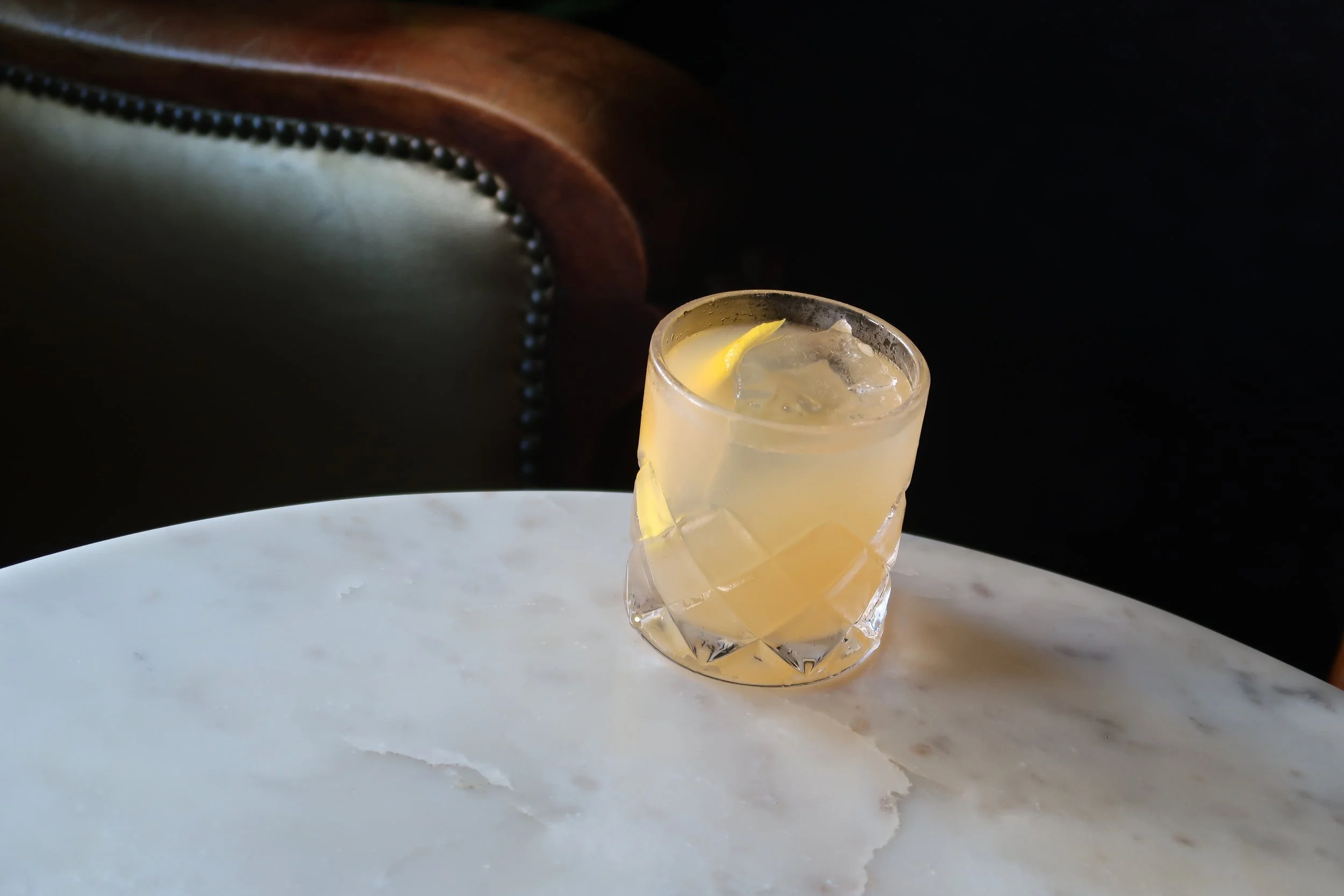
As I was developing this month’s recipes (originating with the Isle of Skye and Cameron’s Kick), I saw the potential for a Rusty Nail-Godfather “mash-up” that would please any fan of stirred, spirit-forward drinks. The resulting cocktail is the best of both worlds–heather and honey from the Drambuie and nutty almond flavor and texture from the orgeat. Though both are associated with the postwar “bachelor drinks” boom, the Rusty Nail dates to the 1930s, far before the birth of the disco-era Godfather.

Tailor’s Flip
I wanted to do a fizz for this month (I do so love a fizz!), but all the combos I tried fell flat! Instead, I decided to eliminate the soda element and incorporate a whole egg instead of just egg white, making it a classic nineteenth-century flip. The resulting cocktail, with smoky, spiced, and tropical flavors is an excellent dessert drink befitting any cold-weather gathering.