

Milano-Torino
The head of the Negroni family isn’t, it might surprise you, the Negroni. The now-iconic drink is actually more like the third generation of the Campari-laced clan. The Milano-Torino was the first to mix Campari and sweet vermouth (a nod to these products’ respective origins), way back in the 1860s.

Negroni
The Negroni emerged circa 1920, but doesn’t show up in bar manuals under that name until the ‘40s, when its equal parts mixture of London dry gin, sweet vermouth, and Campari. It was adopted as a favorite of cocktail revivalists in the aughts and 2010s, which has spawned countless variations.

The Americano
The Americano mightn’t be just a lengthened Mi-To as previously assumed, but rather a genre of drink that combined vermouth with various liqueurs, especially aperitivo and amaro. Fernet-Branca was a popular option, but Campari won out by the ‘30s.

Negroni Sbagliato
Sbagliato means “mistaken” or “bungled” in Italian. That’s a reference to the apocryphal tale told about why the Negroni Sbagliato features prosecco—and no gin. The resulting beverage is a delightful cross between the Americano and the Spritz.
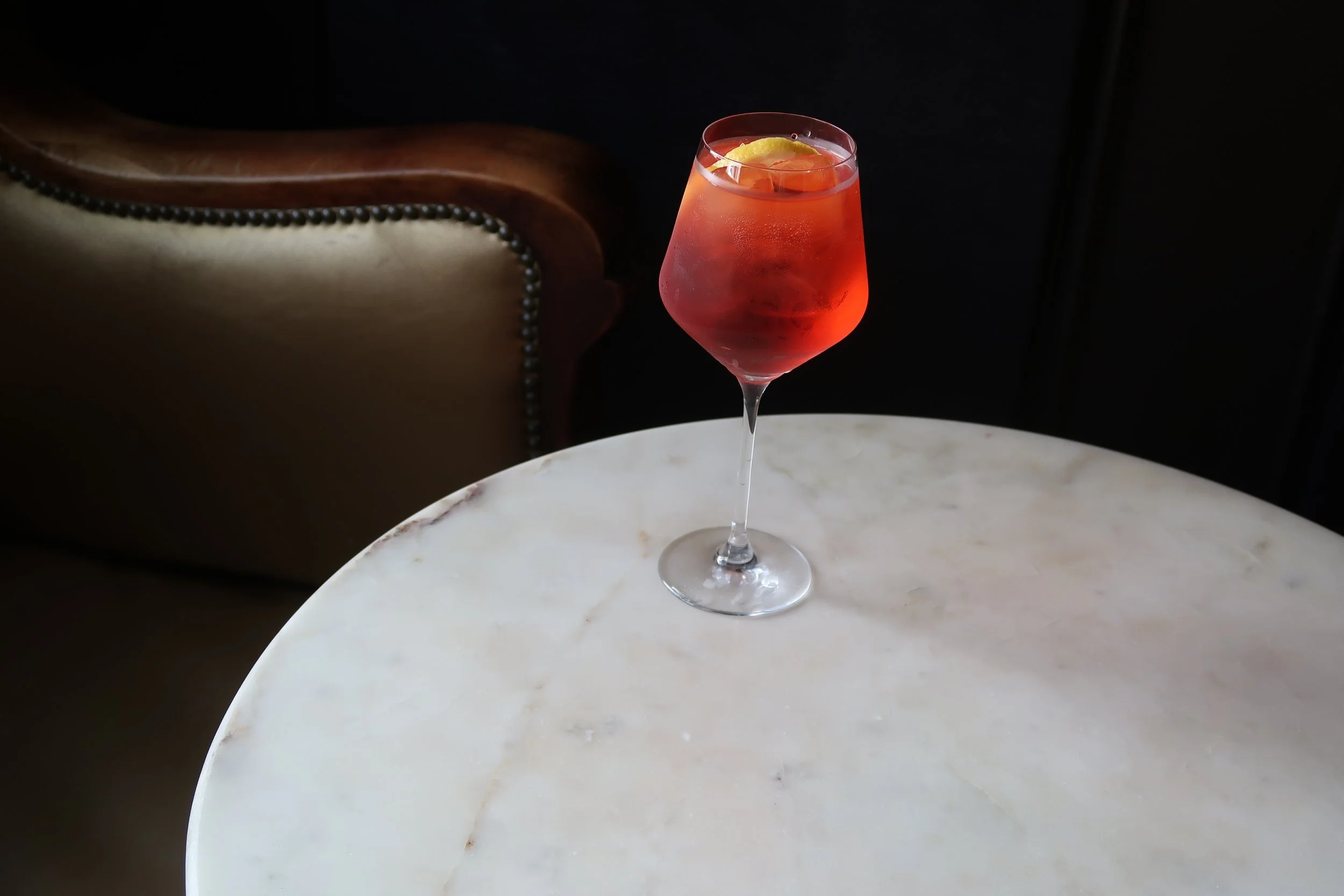
Bicicletta
There was a period of time in the life of the Spritz, where the bubbly and wine elements were still kept separate, i.e. still wine and soda were used in concert to create a similar effect. Both of the lesser-known spritzes we’re highlighting this week are built this way. The Bicicletta combines white wine, Campari, and soda, and dates from around the 1930s.

Giostra d’Alcol
The Giostra d’Alcol (“carousel of alcohol”) is from the same period, invented by futurist Enrico Prampolini. It combines red wine, Campari, and cedrata (a citron soda); its original recipe calls for a garnish of cheese and chocolate on a cocktail pick.


Daiquiri de Cacao
This cocktail takes the Daiquiri’s triumvirate of rum, lime and sugar and adds elements from several sours (including the Sophisticate, which was a major influence on this spec) in the Sloppy Joe’s bar manuals from the ‘30s: crème de cacao, vermouth, and egg white. I absolutely love the way this drink turned out, and it’s extra versatile because there are two garnish options: the perennial bitters design or cold weather-friendly dusting of cocoa powder.

Havana Moon
Longtime Club members might remember this one from the beta test month I ran back in August of 2020, wherein this drink was called The Tall Man from Havana. It has since become a Gigantic classic, where it began traveling under the name Havana Moon (named for the Chuck Berry song). The inspiration was the “Sloppy Joe’s,” the bar’s eponymous drink that combined brandy, port, pineapple, grenadine, and Curaçao. A very good example of the pre-tiki tropical genre.

Lottie Pickford
The Mary Pickford appears in the Sloppy Joe’s books–a mix of rum, grenadine, pineapple, and maraschino liqueur. I took that inspiration, subbed crème de cacao in for the maraschino, added lime for acid, and a small measure of Cognac for vanilla and dried fruit notes. Pickford was a movie star, director and producer; I named this after her little sister, Charlotte, who was also an actor.

Mojito Caballito
This is a little-known Mojito riff dating from the early 1930s at Sloppy Joe’s. It has everything you’d expect from a Mojito–rum, lime, sugar, mint, and soda–but adds a little bit of “French vermouth,” which I interpret here as blanc (or bianco if it’s an Italian producer). This small change adds a slightly floral note and bolsters the lime’s acidity. I like the channel-knife lime peel garnish here along with a big bouquet of mint, of course.

La Hora Dorada
The Margarita is the most popular cocktail in the U.S. and variations on the template always sell well. This is my take on an aperitivo-friendly Margarita. A split base of smoky mezcal and lightly-aged reposado come together with aperitivo wine, lime, grapefruit, and agave, for an exceedingly refreshing, sort of Italianate Margarita. A salt rim tastes great here.

El Conde
This is the “root drink” for this month’s recipes. It was one of those cocktails that I thought up, tried, and loved right away! This spirit-forward, bittersweet drink is adjacent to two well-known agave-based Negroni riffs: the Rosita (tequila, sweet vermouth, dry vermouth, aperitivo liqueur) and the Oaxacan Negroni (mezcal, sweet vermouth, Campari). For a little extra bitterness, opt for a grapefruit twist; orange works great here, too.

Smoky Cooler
This is an exceedingly refreshing beer cocktail that’s absolutely perfect for summer. I took inspiration from several templates: the Paloma (tequila, lime, grapefruit, sugar, soda), Radlers (beer, grapefruit), the Spaghett (domestic lager, Aperol, lemon), and the Michelada (Mexican lager, salt, lime, spice sometimes tomato juice, Clamato and other ingredients).

Rhinestone Cowgirl
This year, my brilliant friend and colleague Kris Kirkland came up with a drink called the Rhinestone Cowboy for the Gigantic spring menu. It consists of mezcal, reposado tequila, Cocchi Rosa, peach liqueur, grapefruit, lime, frozen peach chunks, agave, and basil. I wanted to do something similar with strawberry, so I cut out the mezcal’s smokiness in favor of more vanilla flavor from the tequila and aperitivo liqueur. The results are delicious!

Al’s Julep
As you know, my historically-driven palate favors the spirits that were popular in 19th-century juleps, i.e. rye, Cognac, and rum. For my own julep recipe, I wanted to combine these three in equal parts with a favorite amaro (Braulio or dell’erborista are particularly good here, but there are many that would work!). I also decided to make the garnish do a little aromatic work, hence the nutmeg and shaved coffee bean, which hit the nose along with the mint upon first sip. The sherry float also contributes a nice aroma if desired!

Bourbon Julep
This is probably the drink that first comes to mind when you think of juleps (unless your brain is stuck in the 19th century like me)! The bourbon-based julep is the one that has survived into the modern age, thanks in no small part to its connection with the Kentucky Derby. For this recipe, I wanted it to be exceedingly elemental. Since we’ve combined the sugar and mint in our mint syrup already, this julep requires but two ingredients (plus a big bouquet of mint, of course). It is simplicity at its finest!